Curriculum & Pedagogy
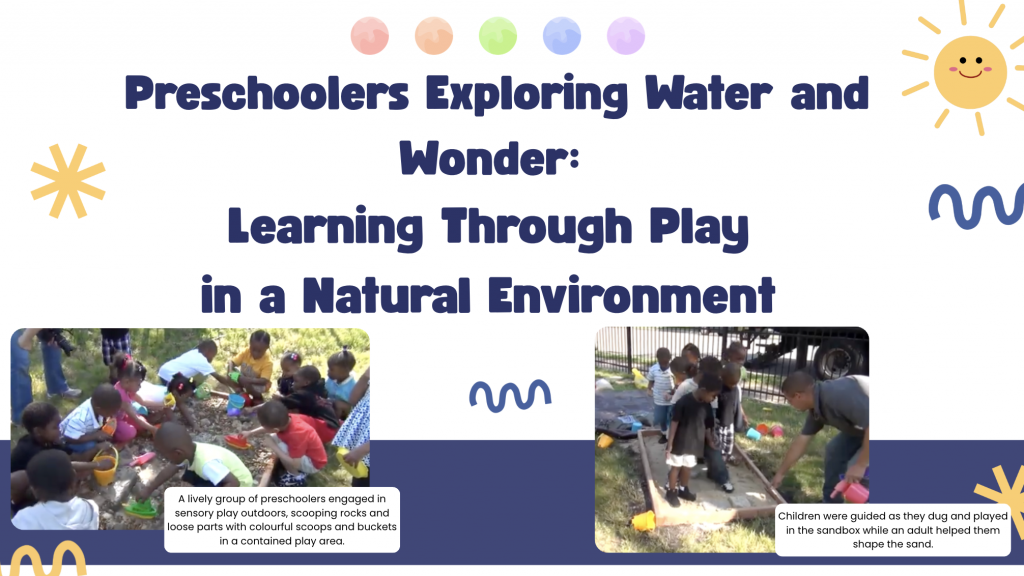
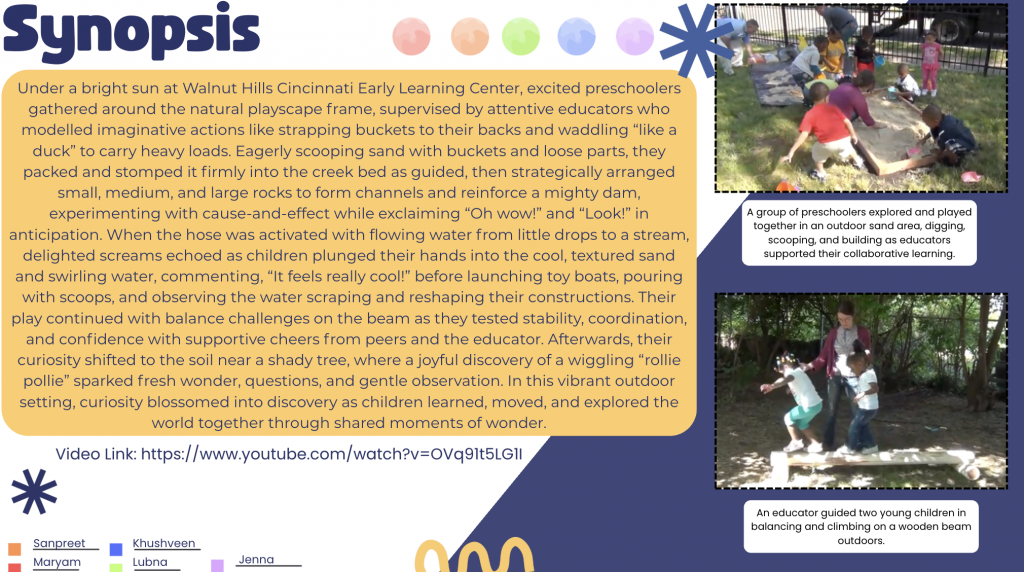
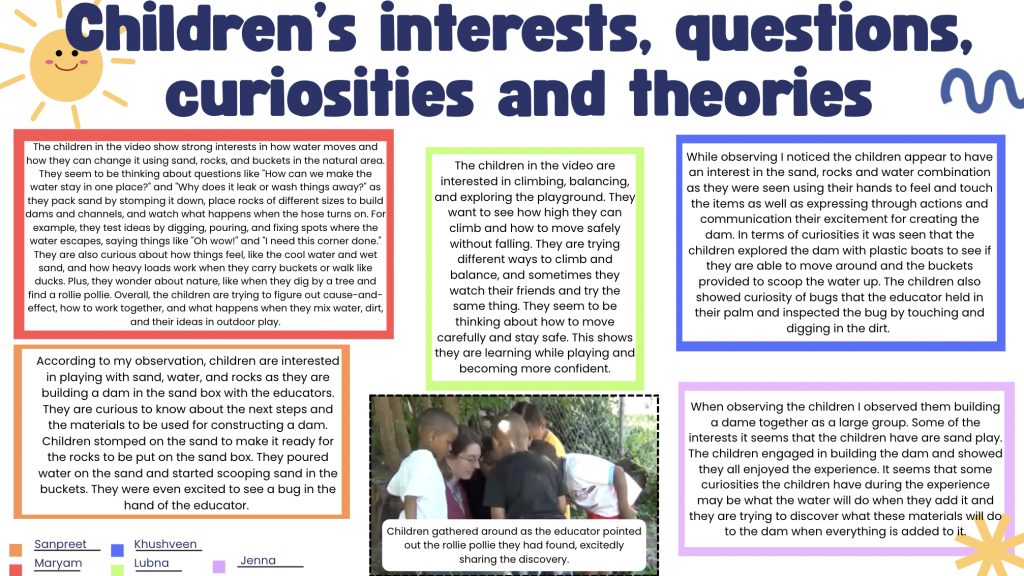
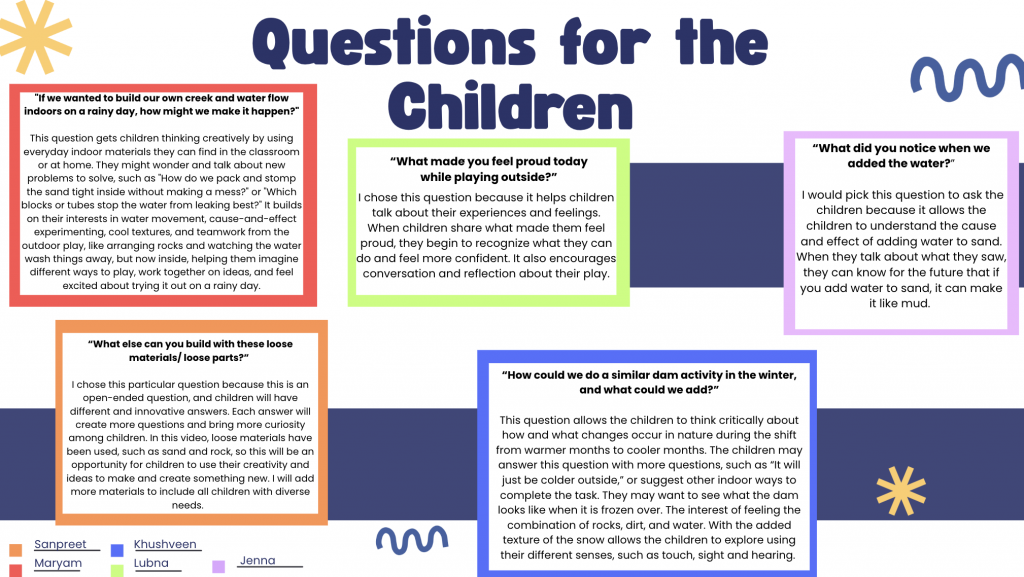
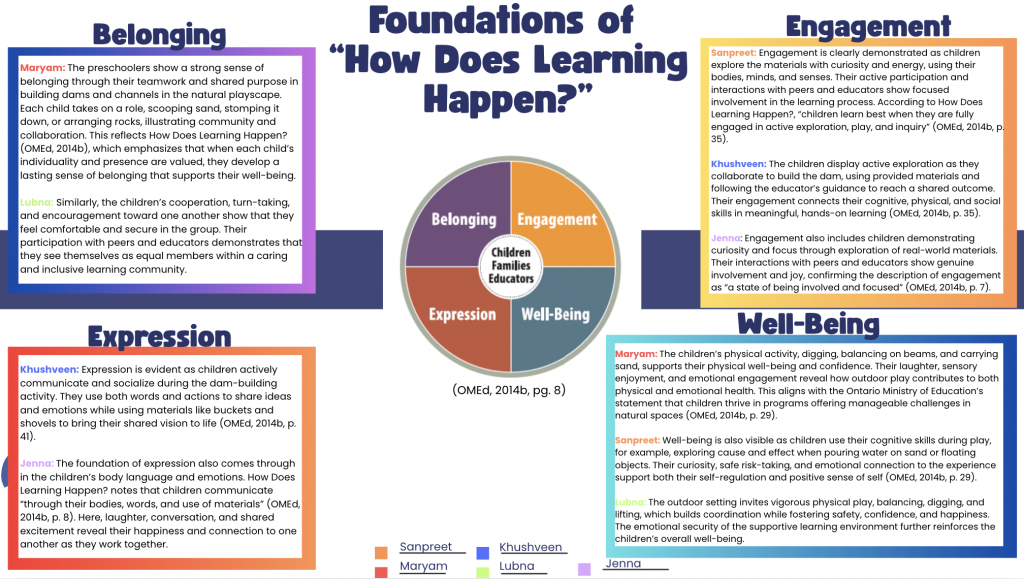
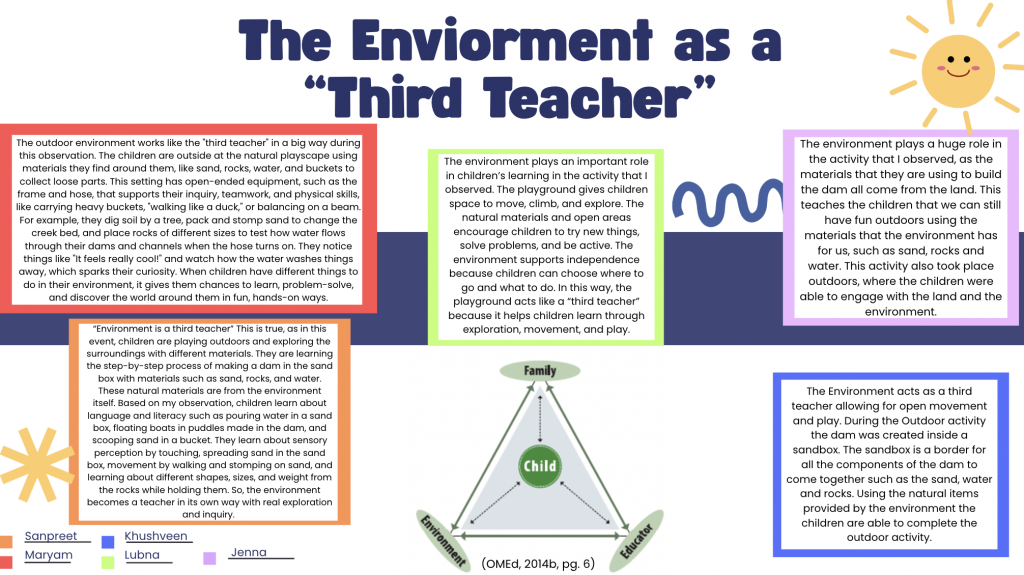
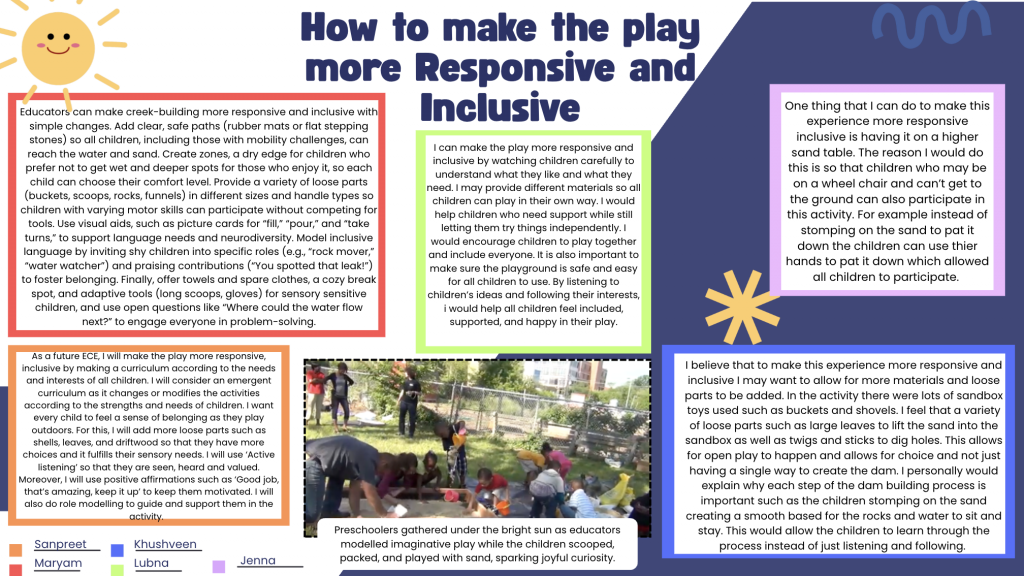
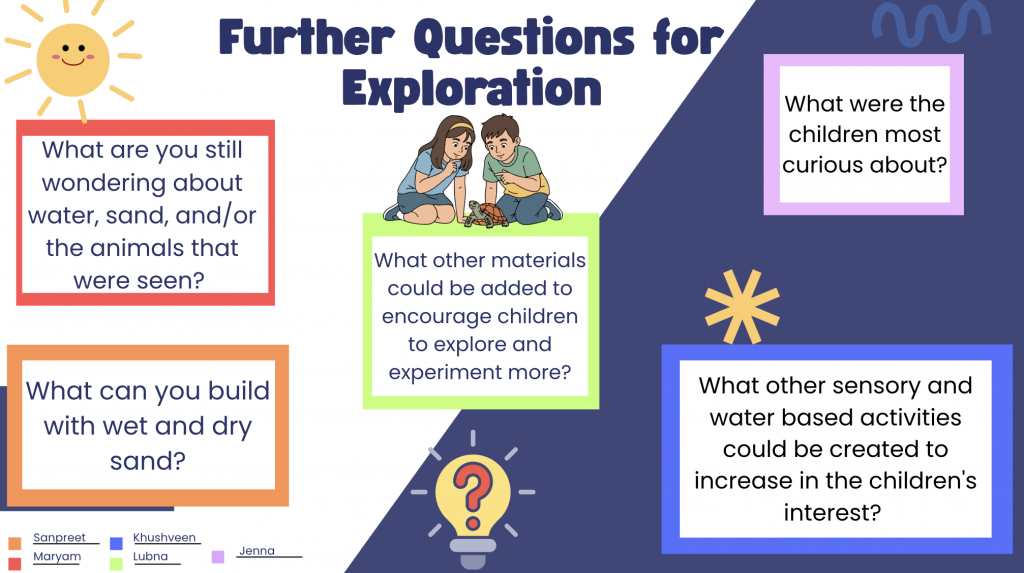
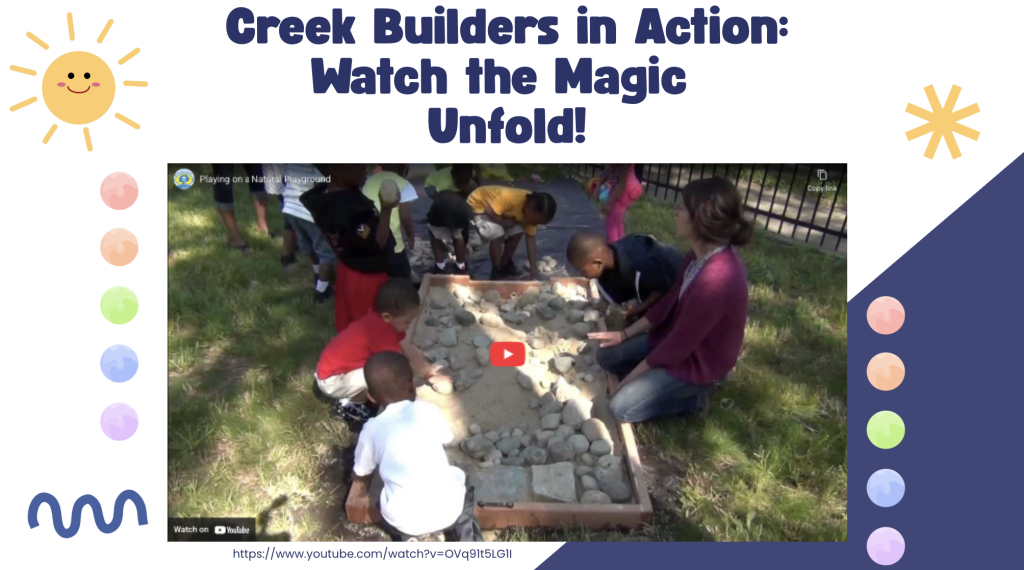
In the pedagogical documentation from an observation at Walnut Hills Cincinnati Early Learning Center, preschoolers joyfully collaborated outdoors to build dams using sand, rocks, and water, guided by educators who modelled imaginative play like waddling ducks with heavy buckets. I used this documentation in my practice to analyze children's emergent curiosities, such as cause-and-effect with flowing water and sensory textures, through peer reflections, How Does Learning Happen? connections, and strategies for responsive inclusivity like adaptive loose parts and visual aids for neurodiverse learners. I chose to feature it in my portfolio as it vividly reflects my teaching philosophy: child-led, play-based inquiry in natural environments as the "third teacher," fostering belonging, well-being, engagement, and expression while co-constructing inclusive learning that honours every child's agency, strengths, and collaborative spirit.
Learning Story 1
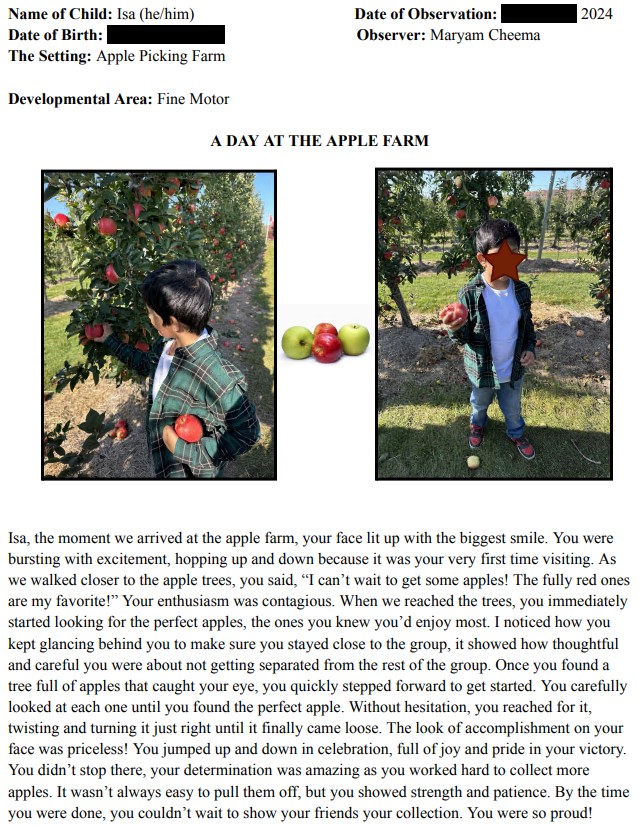
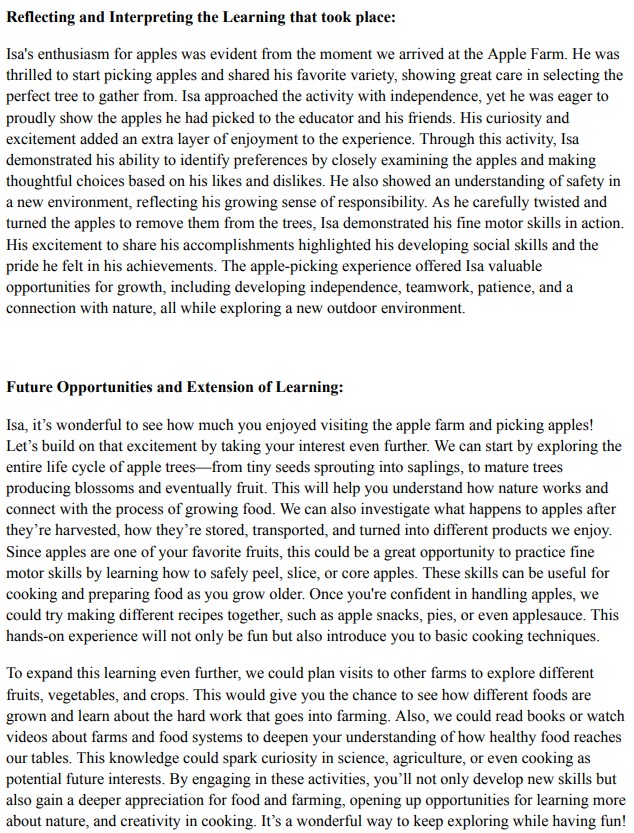
I chose the “A Day at the Apple Farm” learning story for inclusion on my website because it exemplifies my core philosophy of teaching and learning as an Early Childhood Educator, emphasizing child-led exploration, inclusive practices, and holistic development in natural environments. In this narrative, Isa’s vibrant enthusiasm, evident as he eagerly picked apples, navigated challenges like reaching higher branches, and collaborated with peers, highlighted his growth in social-emotional skills, independence, and responsibility, all facilitated by my intentional observation and minimal scaffolding. This approach aligns with my belief that every child, including neurodiverse learners, thrives through emergent, play-based experiences that connect to real-world contexts, such as extending the farm visit into family-involved activities like recipe creation. By putting children in charge, building their strength, and teaming up together, this story truly displays my flexible teaching style. It helps create lifelong learners in caring, fair places.
Learning Story 2
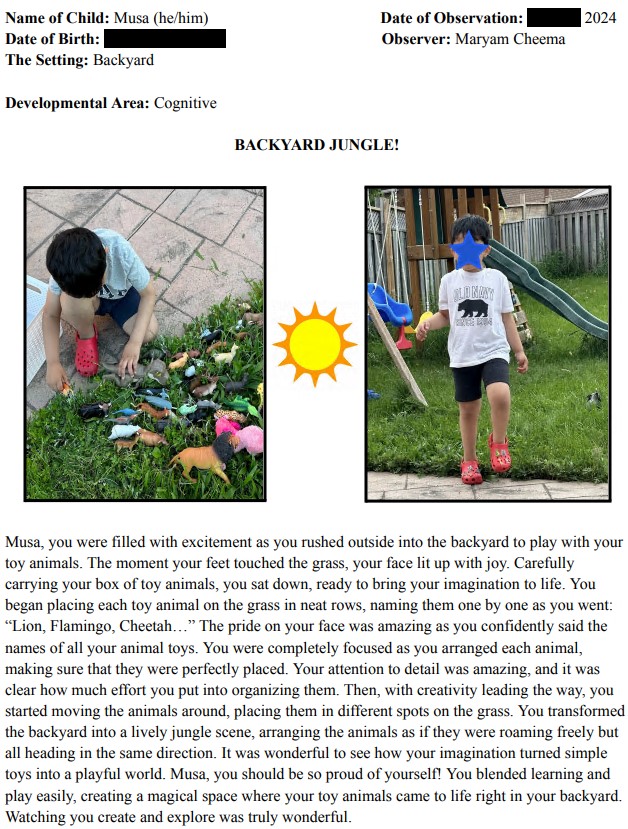
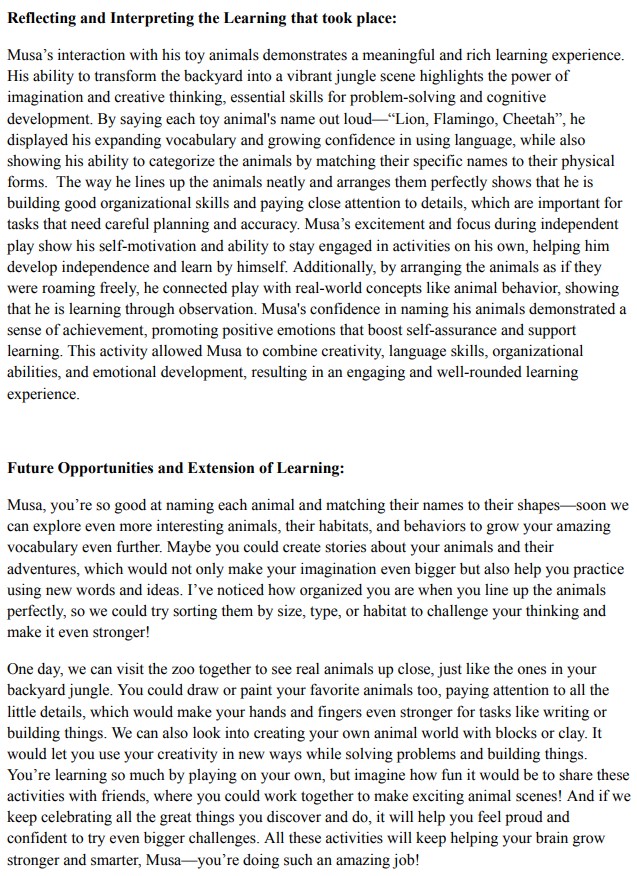
I chose the “Backyard Jungle!” learning story because it perfectly captures my belief that child-led, imaginative play is the primary driver of cognitive and language development. Musa’s independent exploration highlights his ability to categorize, organize, and apply vocabulary in a natural, unscripted setting. This story is deeply representative of my practice, as it reflects my philosophy that children are capable, self-motivated learners who construct knowledge through their own curiosities. By prioritizing observation over intervention, I honour the child’s initiative and the environment as an essential “third teacher.” This narrative demonstrates my commitment to a holistic approach, recognizing not just cognitive milestones, like animal identification, but also the emotional satisfaction and focus Musa finds in his work. Ultimately, this story illustrates my role in scaffolding future learning by building upon a child’s authentic interests to foster a lifelong love for discovery.
Childrens Plan
I chose to feature this Musical Instrument Jam plan on my website because it reflects my belief that children learn best through playful exploration, sensory experiences, and relationships. The experience emerged directly from the children’s genuine interest in sound, rhythm, and movement, which aligns with my philosophy of following children’s cues and building curriculum from their curiosities and strengths (Emergent Curriculum). By positioning myself as a co-learner and facilitator, I create space for children to lead, make choices, and express themselves in multiple ways, including dancing, shaking instruments, and experimenting with new sounds. The plan also demonstrates my commitment to inclusive practice, ensuring every child can participate at their own pace and in their own way, while fostering engagement, communication, and a sense of belonging within the group.
Outdoor Plan
I chose this outdoor plan because it clearly reflects my belief that children learn best through active, joyful movement in a responsive environment. The plan grows directly from my observations of children’s interests in gross motor play, music, and friendly social interaction, showing how I use what I see to co-construct learning experiences with them. By intentionally organizing space and materials to support choice, collaboration, and physical challenge, I position the environment as a teaching partner while observing, scaffolding, and participating alongside the children. This plan represents my commitment to inclusive, strength-based practice, where each child’s curiosity, competence, and well-being guide my decisions and shape our shared learning outdoors.
Community Plan
I chose to include this community collaboration plan because it reflects my commitment to connecting classroom learning with the wider world children and families live in. By partnering with the Toronto Public Library and inviting a librarian into the classroom, I honour my belief that relationships with community agencies strengthen children’s sense of belonging and extend literacy opportunities beyond school walls. The librarian visit and take-home booklets respond to the strengths and needs of a diverse, working‑class, multilingual community by providing free, accessible information about programs and resources in family‑friendly ways. This plan shows my philosophy of viewing families as partners and children as capable community members who can ask questions, share ideas, and carry messages home. It demonstrates how I intentionally design experiences that are engaging, culturally responsive, and inclusive of all families, regardless of income or language background.
Public Narrative - Advocacy
I chose to include my public narrative because it powerfully weaves together my lived experience as a mother of autistic children and my emerging identity as an advocate and Early Childhood Educator. Through the Story of Self, Us, and Now, this artifact shows how I move from personal struggle in the school system to collective action with other special needs families, educators, and community partners. It reflects my belief that storytelling is a tool for social change, helping us transform isolation into connection, and frustration into organized advocacy for inclusive policies and properly funded supports. This narrative represents my philosophy of teaching and learning as relational, justice‑oriented, and action‑driven, where educators use their voices and experiences to challenge inequity and create better futures for all autistic children.
Adapted Book
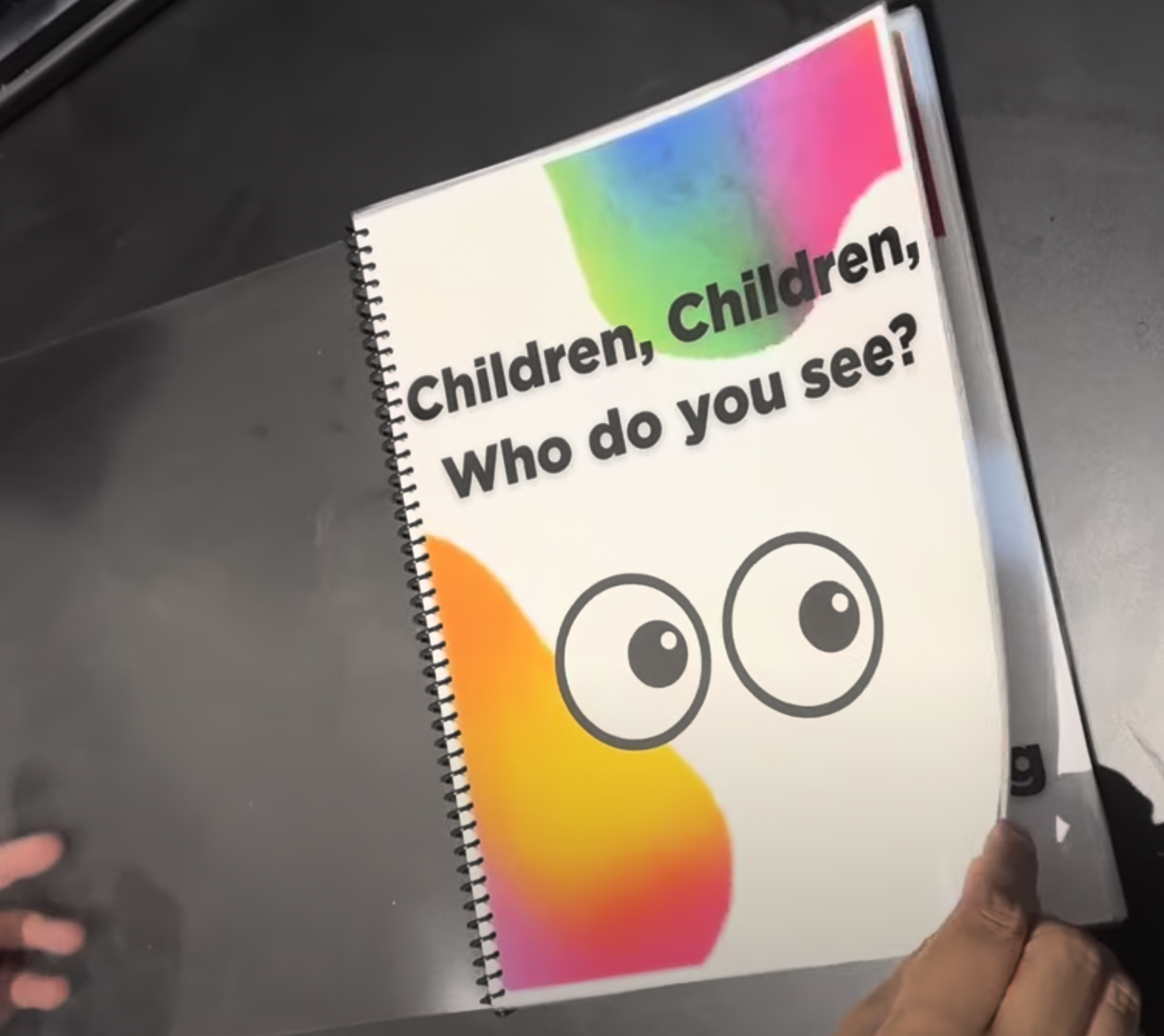
I chose to include my adapted book, “Children, Children, Who Do You See?”, because it shows how I use creativity and familiarity to build meaningful connections with the children in my kindergarten placement. By reworking “Brown Bear, Brown Bear” and inserting the children’s own photos, I invited them to see themselves represented in the story, strengthening their sense of identity, belonging, and joy in reading. This artifact reflects my philosophy that literacy learning should be playful, culturally and personally responsive, and grounded in children’s real lives and relationships. It also demonstrates how I intentionally design materials that support language development, social-emotional learning, and classroom community by making every child feel seen and valued in our shared learning space.
Community Organization Infographic - EarlyOn
I chose this community organization infographic because it highlights how my practice extends beyond the classroom into the wider social context that shapes children and families in the community. The programs at the Jane and Finch Community and Family Centre, such as EarlyON play-based learning, one-on-one support for families of children with diverse needs, financial empowerment, settlement services, and youth programs, reflect my belief that early learning must be holistic, culturally responsive, and grounded in community partnerships. Including this artifact shows how I use local demographic and funding data to advocate for accessible, inclusive services and to design programming that honours families’ languages, cultures, and realities. It represents my philosophy of teaching and learning as relational, equity-focused, and collaborative, where educators work alongside community organizations to create safe, empowering spaces for all children to thrive.
GAP Canvas - Neurodiverse Learners in Ontario
I chose this Challenge because it synthesizes my advocacy for neurodiverse children in Ontario into a clear analysis of what is happening, why it matters, and where change is possible. By mapping challenges, impacts, current models, and missing supports, this artifact shows how I ground my practice in research, systems thinking, and Bronfenbrenner’s ecological lens. It reflects my philosophy that effective teaching and learning must address long diagnostic waits, underfunded services, and inequitable schooling through cross‑sector collaboration, consistent IEP follow‑through, and meaningful family engagement. Including this piece on my website demonstrates that I see myself not only as a classroom educator, but as a critical thinker and advocate who uses evidence to imagine practical, collective solutions for autistic children and their families.
Challenge Gap Canvas
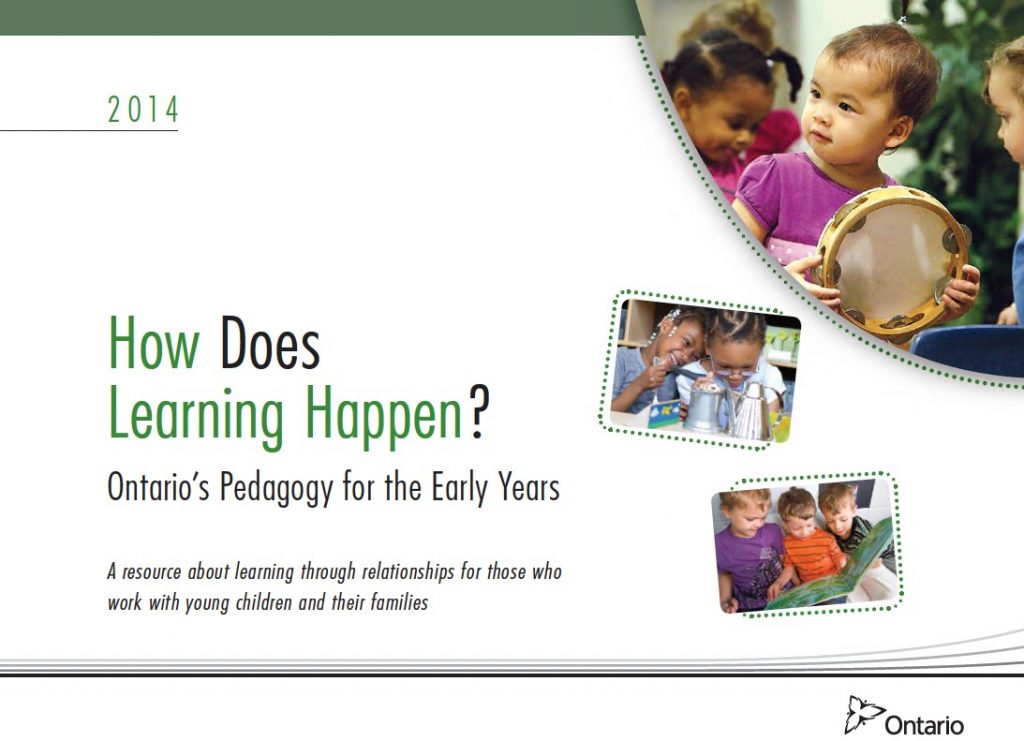
I chose to include How Does Learning Happen? Ontario’s Pedagogy for the Early Years in my portfolio because it has been an important guide in shaping my understanding of children’s learning, relationships, and well-being. This resource reflects my belief that children learn best through responsive, caring, and inclusive interactions. I have used it in my practice to support intentional planning, observe children’s interests, and create environments that promote belonging, engagement, and expression. It has also helped me reflect on my role as an educator and strengthen my ability to work collaboratively with children, families, and colleagues. By including this resource, I am demonstrating my commitment to a thoughtful, child-centred pedagogical practice grounded in respect, support, and connection.
I chose to include More Than Words: A Parent’s Guide to Building Interaction and Language Skills for Children with Autism Spectrum Disorder or Social Communication Difficulties in my portfolio because it supports my interest in inclusive practice and communication development. This resource is valuable to me because it offers practical strategies for building language, interaction, and meaningful connections with children with autism or social-communication needs. I have used ideas from this book in my practice to support responsive interactions, encourage communication through play, and better understand each child’s individual strengths and needs. It has helped me reflect on how I can create more supportive and accessible learning experiences for children and families. By including this resource, I am showing my commitment to strengthening my knowledge and using evidence-based approaches that promote inclusion, connection, and child-centred support.